
SAUDI ARABIA: EASA Widens Jeddah FIR Avoidance after Houthi Strikes
EASA has revised CZIB-2026-09-R1 given the recent escalation in Houthi attacks on Saudi territory.
RIYADH, Saudi Arabia
- The European Union Aviation Safety Agency (EASA) revised Conflict Zone Information Bulletin CZIB-2026-09-R1 on 9 October 2026 regarding operations in Saudi airspace given the recent escalation in Houthi attacks. It is valid until 16 November 2026 unless reviewed earlier.
- The bulletin covers operators under Commission Regulation (EU) 965/2012 and third-country operators flying to, from or within the European Union under an EASA third country operator authorisation.
- EASA recommends no operations, at any flight level, inside two portions of Saudi airspace bounded by the Jeddah flight information region (FIR) boundary and the lines RIBOK–BOSUT–MIGDA–RAGNO–MIXUG–DEKLO–OBSAM–SILPA, and ULBAM–TOTEB–DURMA–LAKSO–SOLAT.
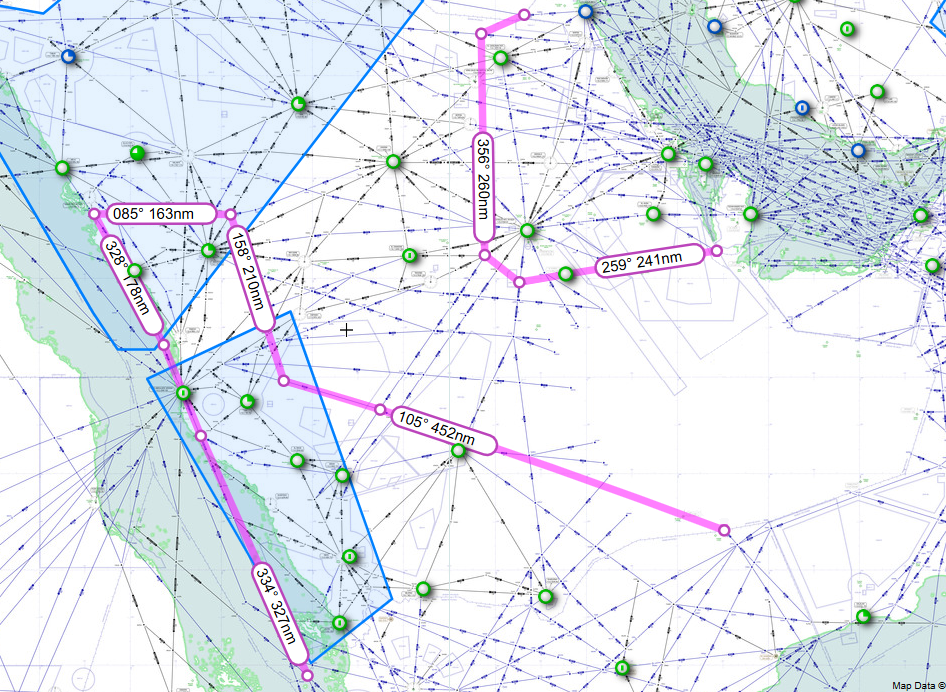
- Operators should exercise caution in the rest of FIR Jeddah (OEJD), keep a current risk assessment and contingency plan, and be ready for short-notice instructions from the state authorities.
- EASA says Houthi missile and drone attacks in September and early October widened beyond the south and south-west, with repeated strikes on the Riyadh area, including the airport, and activity reported toward Tabuk, Medina and Yanbu. It cites a greater focus on aviation infrastructure, and the risk of misidentification, interception and falling debris when air defences are active.
- The agency says Saudi Arabia has managed the airspace, including tactical deconfliction and Emergency Security Control of Air Traffic (ESCAT), but the environment can deteriorate from risks outside the national authorities' control.
- The original bulletin was issued on 30 September 2026. The 9 October revision updates the description and the recommended avoidance area.
Sources:
Comments ()